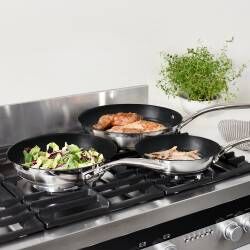
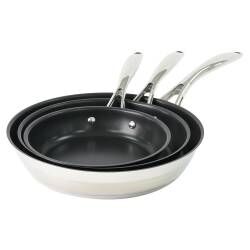
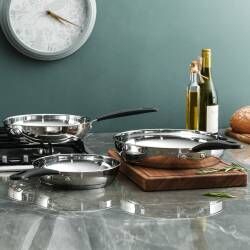
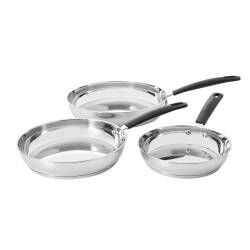
Allow your cookware to cool
Allow hot and warm pans to cool down to room temperature before washing. If you plunge a warm pan into cold water, it can cause the pan to warp, damaging the functionality of the cookware.
ProTip: Don’t let salty water sit in the pan as this can cause pitting. Always pour away salty water once finished.
Handwash is preferred
While some stainless steel pans are deemed dishwasher safe, we always recommend handwashing your pans instead as this can preserve the pan’s shiny finish and prevent any damage that may occur. Some dishwasher powder and capsules can be abrasive to the pan’s surface.
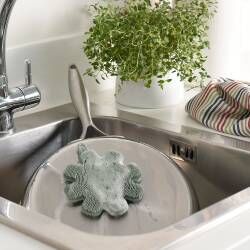
Gently scrub in hot, soapy water
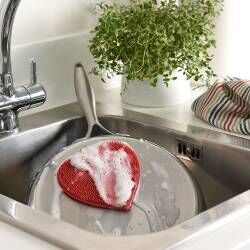
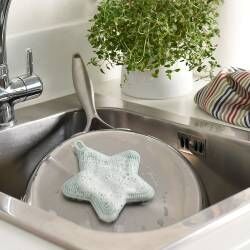
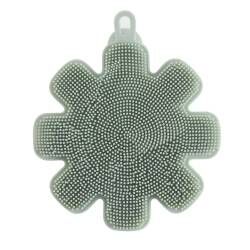
Once the pan is cool enough, soak it in hot, soapy water and mild washing up liquid. Avoid using steel wool scrubbers and cleaners, and use a sponge or nylon scrubber instead. Rough sponges, pads or scrubbers can cause scratches, ruining the sleek finish of your stainless steel.
Use a paste of baking soda and water for stubborn residue
For tough, burnt-on food or stains, you may need to soak your pans a little longer. If this still doesn’t work, create a paste by mixing baking soda with water and leave for at least 30 minutes or until the food residue has softened. Rinse and clean as usual with a soft sponge to remove any food residue and the baking soda paste.
Rinse and dry immediately
Once you’ve cleaned your pans, rinse and dry immediately to prevent water spots from forming. However, if you do notice any water spots, you can use lemon juice to wipe them away. Avoid stacking pans when storing in cupboards unless you’re using pan protectors, as this can cause friction and scratch marks.


 Electricals
 Coffee
 Mixers and Blenders
 Kettles and Toasters
 Cooking
 Small Appliances
 Cookware & Bakeware
 Pots and Pans
 Cookware sets
 Speciality Cookware
 Baking
 Roasting
 Knives
 Knife Sets
 Single Knives
 Knife Accessories
 Tableware
 Single Items
 Dinner Sets
 Serveware
 Table Accessories
 Kids tableware
 Drinkware
 Hot Drinkware
 Cafetieres and Teapots
 Drink Accessories
 Accessories
 Kitchen Utensils
 Tools and Gadgets
 Storage
 Cleaning
 Offers
 Clearance
 Gifting
 Gift Cards