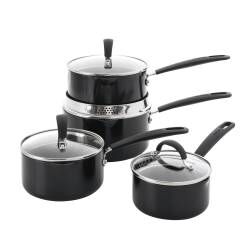
How to make a bechamel sauce
Also known as ‘white sauce,’ the bechamel sauce is often used for pasta dishes as well as fish pies. Small sauces derived from a bechamel sauce are mornay sauce and other cheesy sauces.
Ingredients
1 onion
1 bay leaf
2 cloves of garlic
500ml whole milk
50g butter
50g plain flour
Method
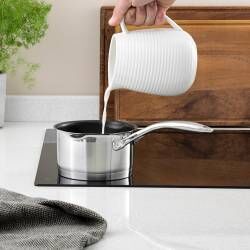
Halve your onion and stud with your bay leaf and cloves. Place your studded halved onion into the small saucepan or milk pan which is filled with 500ml of whole milk. Gently bring the milk to the boil then turn off the heat and leave the milk to infuse for 15-20 minutes.
In your second saucepan or milk pan, melt 50g of butter and then add 50g of plain flour. Continuously stir the mixture until it turns into a paste (this is how you make the roux). Once it's thickened, continue cooking for an additional 1-2 minutes.
Use the slotted spoon to remove the onion and any bay leaves or cloves that may have escaped. Gradually add the heated milk to the roux, continuously stirring as you go, until you get a silky, smooth sauce. Continue to cook the sauce, while stirring, until it has thickened (this can take around 5-10 minutes).
Season your bechamel sauce to taste.
How to make tomato sauce
Although similar to the basic tomato sauce usually served with pasta or used on pizza bases, this classic tomato sauce is a little more complex. This tomato sauce may need a roux to help thicken it and can be used to make creole sauce and Spanish sauce.
Ingredients
1 large onion, finely chopped
2 cloves of garlic
3 tbsp olive oil
12 ripe Roma tomatoes
1 bay leaf
1 tsp fresh oregano
2 tsp fresh thyme
2 tsp fresh basil, finely chopped
Salt and pepper to taste
Method
Prepare your ingredients. Chop the large onion, mince the garlic, and use a paring knife to score each tomato with an 'X' on the bottom.
Blanche your tomatoes once the bottoms have been scored. Firstly, bring a big pot of water (in a stock pot or saucepan) to a rolling boil (approximately 100C) over a high heat. Reduce the heat ever so slightly before placing the tomatoes into the water.
Cook the tomatoes for approximately 2 minutes, using this time to prepare the ice water bath (use the mixing bowl, ice and water to do this). Remove the tomatoes from the hot water with a slotted spoon and immediately place them in the ice water bath to immediately stop the cooking process. The skins of the tomatoes will start to split - once cool enough to touch, remove the skins and place the now skinless tomatoes in clean bowl at room temperature.
Take your large frying pan and add your olive oil over a high heat. When the oil is hot enough, add your chopped onion and cook until it becomes translucent (approximately 3 minutes). Season with salt and pepper.
Add the garlic and bay leaf to the pan, and if needed, add more olive oil. Cook until the garlic is soft.
Add the tomatoes and stir to combine the ingredients. Add the herbs and stir into the mix, bringing the pan to a simmer.
Reduce heat and continue to simmer the contents of the pan on a medium to low heat for 40-45 minutes, or until the tomatoes have turned a rich red colour. You want the consistency of your sauce to be thick. Season with salt and pepper.
How to make hollandaise sauce
The hollandaise sauce is most associated with egg dishes like eggs benedict and royale and known for its rich, creamy and lemony flavours. While hollandaise sauce can be enjoyed as is, you can also use it to make a bearnaise sauce.
Ingredients
125g butter
2 egg yolks
½ tsp white wine vinegar
Juice of a lemon
Salt
Method
Melt the butter in a saucepan, skimming the surface to remove any white solids that may float to the top. Once melted, reduce the heat to keep the butter warm without risk of burning it.
Put the egg yolks and white wine vinegar into a glass or metal bowl and add a pinch of salt and a splash of cold water. Whisk the ingredients together before placing the bowl over a small saucepan of barely simmering water. Continuously whisk the mixture until pale and thick. This can take around 3-5 minutes.
Remove the bowl from heat and start to whisk in the melted butter bit by bit until it is completely incorporated. You should now have a creamy and thick hollandaise sauce.
Season your hollandaise with lemon juice. Keep warm until served.
How to make veloute sauce
Typically made by thickening white stock with a roux, the veloute sauce has a few well-known variations. You can make chicken, veal or mushroom veloute sauce, depending on the dish it’s accompanying. Our recipe is for a classic chicken veloute sauce that uses chicken stock.
Ingredients
2 tbsp clarified, unsalted butter
600ml chicken stock
3 tbsp all-purpose flour
Method
Add the stock to one of your saucepans and start to simmer. Once simmering, lower the temperature to keep it hot.
In another saucepan, melt the clarified butter over a medium heat until it starts to froth (but keep it from turning brown, as this can change the colour of the veloute, making it appear darker than its desired off-white colour).
Slowly add the flour to the melted clarified butter, using a wooden spoon to gently stir the ingredients together. By doing this, you will create a paste that is known as a roux. Once the flour and butter are mixed, heat the roux for a further few minutes until the roux is blonde in colour.
Start to slowly add the heated chicken stock to the roux, using a wire whisk to keep the mixture free from lumps. Keep whisking the entire time you are adding the chicken stock.
Once the entirety of the chicken stock is added, simmer the mixture, reducing the heat when needed. Simmer for around 30 minutes or until the volume of the mixture has reduced by about one-half. While reducing, remember to stir frequently to make sure there are no lumps and to stop the sauce from scorching at the bottom of the pan. Use your slotted ladle to skim the top of the sauce's surface, removing any lumps or impurities that may have risen to the surface.
Test the sauce's thickness by dipping the back of a tablespoon into the mixture. If it's the right thickness, the sauce will coat the back of the spoon without the sauce running off it.
Remove the sauce from the heat and pour through a wire mesh strainer (or cheesecloth) for an extra smooth consistency.
How to make espagnole sauce
Espagnole sauce is a classic brown sauce usually made from beef or veal stock as well as tomatoes. Made from caramelised vegetables, this sauce adds a deep flavour to a variety dishes like roast beef or lamb. Espagnole sauce is the base for many other sauces like lyonnaise sauce.
Ingredients
½ large onion, diced and the core disregarded
¼ carrot, diced
¼ celery, diced
1 bay leaf
½ tsp dried thyme
3 stems fresh parsley stems
7 whole black peppercorns
25g clarified, unsalted butter
25g all-purpose flour
2 tbsp tomato puree
700ml beef stock
Method
Gather your bay leaf, thyme, parsley stems and peppercorns and place them on top of your cheesecloth. Bring the corners of the cheesecloth together and tie with a piece of string or twine. This creates a sachet that will be used to help flavour your sauce.
Melt your butter in a saucepan over a medium heat until it becomes frothy. Make sure the butter does not burn by stirring when needed.
Add the mirepoix (onions, carrots and celery) to the melted butter and sauté until lightly brown.
With your wooden spoon, stir in the flour a little bit at a time until a paste starts to form. This paste is your roux.
Once you have used all the flour and your roux has developed, cook the contents for a further five minutes on a low heat until it takes on a very light brown colour. Stir to keep the ingredients from sticking to the bottom of the pan and burning.
Slowly add the stock and the tomato puree to the roux, stirring vigorously with your wire whisk to stop lumps from developing.
Bring the sauce to a boil, lower the heat, and add the sachet of herbs that you made at the start. Simmer for 50 minutes or until the sauce has reduced by a 1/3. Intermediate stirring is required to stop the sauce from burning during the simmering process. Impurities may rise to the top of the mixture, so use your ladle to skim them off from the surface.
Once the sauce has reduced, remove the pan from the heat and retrieve the sachet. Strain the sauce through a wire mesh strainer and into a separate saucepan for an extra smooth consistency.


 Electricals
 Coffee
 Mixers and Blenders
 Kettles and Toasters
 Cooking
 Small Appliances
 Cookware & Bakeware
 Pots and Pans
 Cookware sets
 Speciality Cookware
 Baking
 Roasting
 Knives
 Knife Sets
 Single Knives
 Knife Accessories
 Tableware
 Single Items
 Dinner Sets
 Serveware
 Table Accessories
 Kids tableware
 Drinkware
 Hot Drinkware
 Cafetieres and Teapots
 Drink Accessories
 Accessories
 Kitchen Utensils
 Tools and Gadgets
 Storage
 Cleaning
 Offers
 Clearance
 Gifting
 Gift Cards