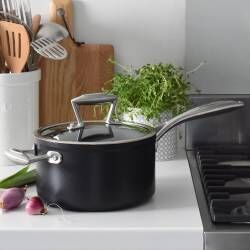
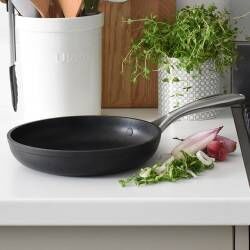
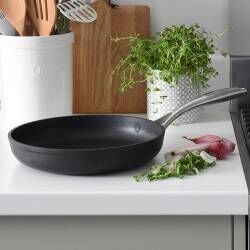
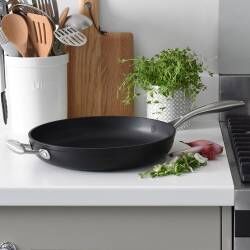
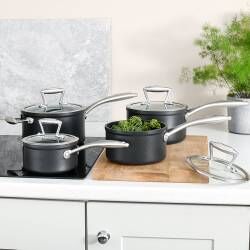
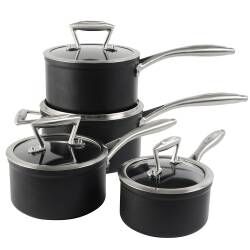
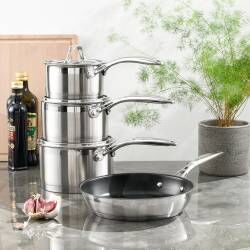
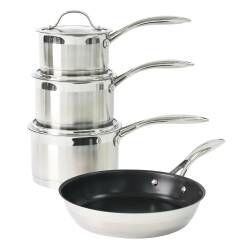
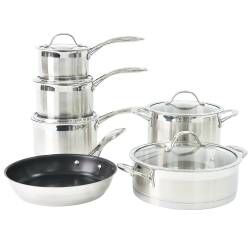
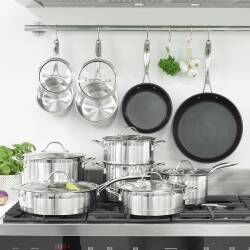
Handwash is best
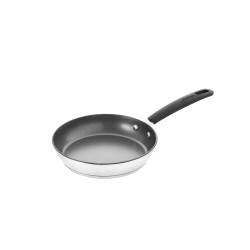
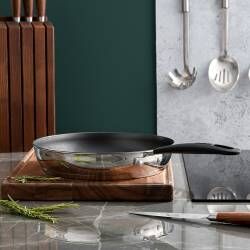
Dishwashing has its uses, but not when it comes to cleaning pans. High temperatures and harsh detergents will shorten the lifespan of your pans, damaging the non-stick coating and making it less effective. The dishwasher can also dullen the look and feel of your pans.
Instead, handwash using hot water, mild washing up liquid and a non-abrasive sponge. Steel wool cleaners can scratch and strip the non-stick coating from the pan, ruining the pan’s surface.
Allow the pans to cool down
The tip is for all cookware, not specifically for non-stick. Avoid overheating your pans when cooking, but also always allow the pan to cool down before submerging into water and cleaning. Going from hot to cold can cause thermal shock, damaging the pan’s non-stick surface and causing the pan to warp in shape.
The best way to avoid thermal shock is to gradually heat up your pan on the hob with oil (an empty pan can cause stress to the pan’s coating). Once you’ve finished cooking, leave the pan to cool down before placing it in water to clean.
Avoid metal utensils when cooking and cleaning
Metal utensils, harsh scrubbers and steel wool cleaners can cause damage to the pan’s non-stick coating, causing scratches and peeling. Once damaged, the non-stick coating is less effective and can reduce its non-stick capabilities. Only use non-scratch or softer sponges to avoid marks.
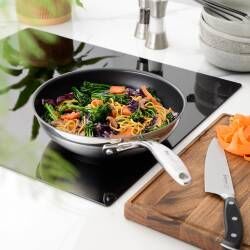
The same rules apply when cooking with non-stick pans too. Metal utensils like spatulas, spoons and turners should be avoided as this can scratch and remove the non-stick coating. Instead, use silicone or wooden utensils.
Don’t overheat the pan
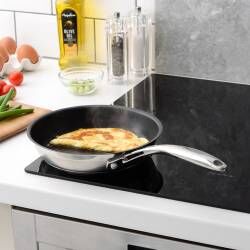
Although a cooking precaution, this can prevent damage to the pan and avoid burnt-on food that’ll result in tougher cleaning practices. By cooking over a too-high temperature, you not only cause damage to the non-stick coating but also increase the risk of burning food onto the surface. Stick to a low, medium heat – and never go above a medium-high heat, especially when cooking on an induction hob.
For higher heat cooking tasks like browning, sauteing and flambéing, we recommend using uncoated pans as they can withstand higher temperatures.


 Electricals
 Coffee
 Mixers and Blenders
 Kettles and Toasters
 Cooking
 Small Appliances
 Cookware & Bakeware
 Pots and Pans
 Cookware sets
 Speciality Cookware
 Baking
 Roasting
 Knives
 Knife Sets
 Single Knives
 Knife Accessories
 Tableware
 Single Items
 Dinner Sets
 Serveware
 Table Accessories
 Kids tableware
 Drinkware
 Hot Drinkware
 Cafetieres and Teapots
 Drink Accessories
 Accessories
 Kitchen Utensils
 Tools and Gadgets
 Storage
 Cleaning
 Offers
 Clearance
 Gifting
 Gift Cards