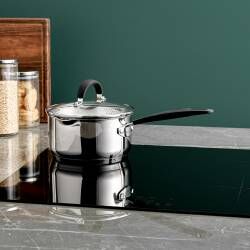
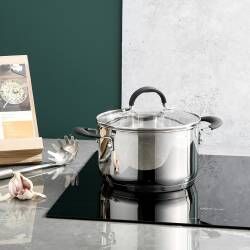
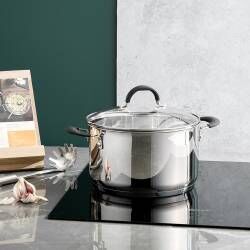
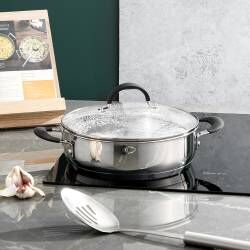
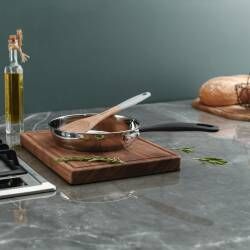
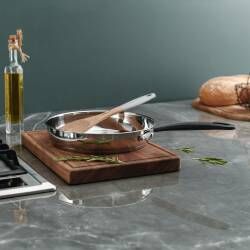
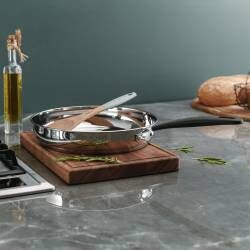
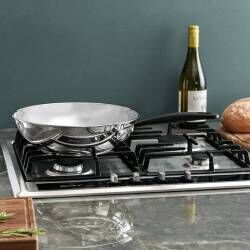
Benefits of uncoated pans
High heat cooking
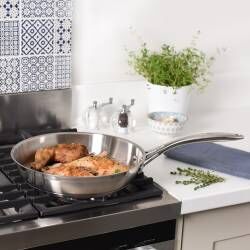
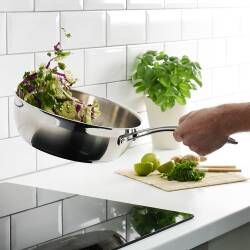
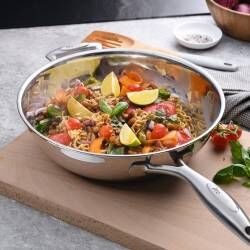
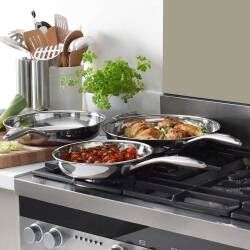
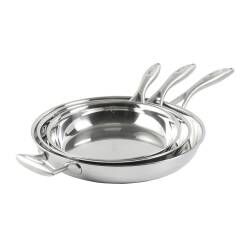
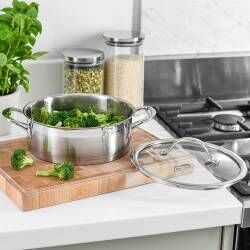
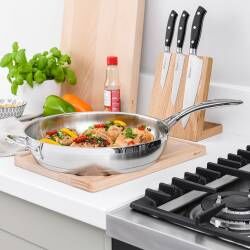
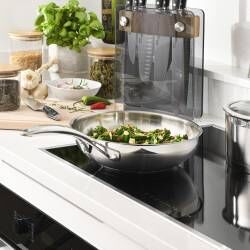
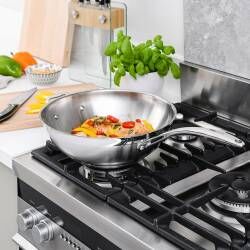
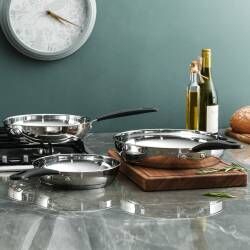
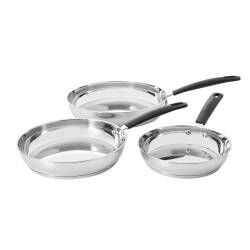
As previously mentioned, uncoated pans can withstand higher temperatures because of the lack of coating, making them fantastic at searing, browning, flambéing, sauteing and more. However, because of its uncoated surface, you need to preheat the pan, ensure proper heat control throughout, use plenty of oil and be patient. You can tell when food is ready to be flipped or moved because the ingredients will release and no longer stick to the pan’s surface.
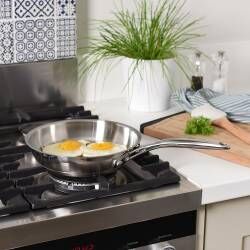
Although you can use uncoated cookware when cooking delicate foods like eggs, pancakes or fish, we do recommend using non-stick pans instead. The instant easy release of non-stick prevents batter, eggs, etc from sticking to the pan’s surface.
Great at creating pan sauces
When caramelising meats or vegetables, you may find a residue left on the bottom of the pan – this is called fond and a great source of flavour that can be used to create pan sauces by deglazing. To deglaze, pour liquid such as wine, stock or water into the pan and use a spatula or wooden spoon to loosen the browned bits of food, causing them to dissolve. Fond will typically only appear on uncoated pans like stainless steel, carbon steel and cast iron.
Naturally non-stick
If proper cooking methods are used, then uncoated cookware will develop a natural non-stick surface. Always remember to preheat the pan, use plenty of oil or butter, only cook with room temperature or dry foods and be patient – food will initially stick but eventually release once a crust has formed.
Versatile cooking
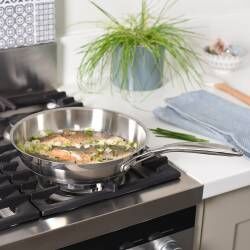
The absence of a non-stick coating allows you to cook a larger variety of foods. While non-stick cookware is great for cooking “stickier” foods like eggs, fish and pancakes, cooking with uncoated cookware is fantastic for searing steaks and skin-on fish as well as caramelising onions, mushrooms and other veggies. You can also use uncoated pans to simmer and thicken sauces.
Ideally, you’d use your non-stick pans for more delicate foods, reducing the risk of tearing the ingredients when cooking, while using uncoated cookware for recipes that require high temperatures and searing.
Easy cleaning
We always suggest that you follow the care and cleaning instructions provided by the manufacturer. However, we recommend that you handwash our pans to preserve longevity. Once you’ve left your pans to cool, simply wash with hot, soapy water and use a mild washing up liquid. Use a sponge to remove any burnt-on pieces of food.
For a more in-depth instructions, we recommend reading our guide on how to clean stainless steel pans.


 Electricals
 Coffee
 Mixers and Blenders
 Kettles and Toasters
 Cooking
 Small Appliances
 Cookware & Bakeware
 Pots and Pans
 Cookware sets
 Speciality Cookware
 Baking
 Roasting
 Knives
 Knife Sets
 Single Knives
 Knife Accessories
 Tableware
 Single Items
 Dinner Sets
 Serveware
 Table Accessories
 Kids tableware
 Drinkware
 Hot Drinkware
 Cafetieres and Teapots
 Drink Accessories
 Accessories
 Kitchen Utensils
 Tools and Gadgets
 Storage
 Cleaning
 Offers
 Clearance
 Gifting
 Gift Cards